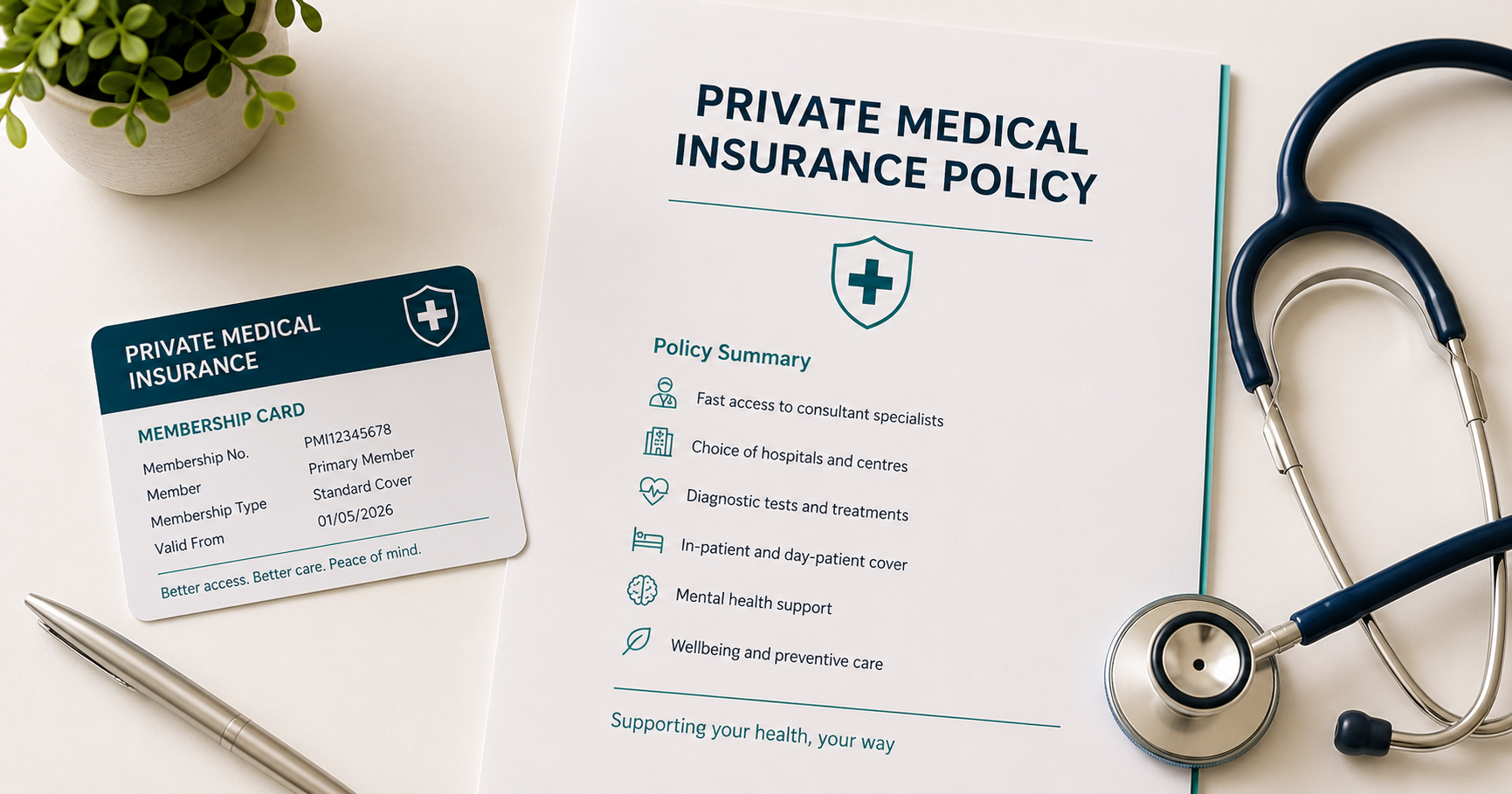
Private health insurance (PMI) pays for private diagnosis and treatment of acute medical conditions. It covers specialist consultations, diagnostic scans, surgery, and private hospital stays. It does not cover A&E, pre-existing conditions, chronic disease management, or maternity under standard policies. The average cost for a 40-year-old in 2026 is £1,435 per year. With 5.4 million people on the NHS elective waiting list as of early 2026, PMI addresses a real and measurable gap — but only for certain types of care.
What Private Health Insurance Does — and the Coverage Gaps Most Buyers Miss
The single biggest source of disappointment with private medical insurance is the gap between what buyers expect it to cover and what the policy document actually says. This section maps that gap precisely.
What PMI Covers
Private medical insurance covers the cost of private treatment for acute conditions — medical problems that have a defined course of treatment, are expected to improve with intervention, and are not the result of a pre-existing condition. In practice this means:
- Specialist consultations: Private appointment with a named consultant of your choosing, typically within 5–10 working days of GP referral versus 14–21 weeks on the NHS in 2026.
- Diagnostic tests: MRI, CT scans, blood panels, biopsies. Private MRI costs £450–£800 without insurance; with insurance, this is covered subject to policy limits and any excess.
- Surgery and inpatient treatment: Elective procedures including orthopaedic surgery, hernia repair, cataract removal, and similar procedures — the most commonly claimed items on PMI policies.
- Private room during hospital stays: Standard on all comprehensive PMI policies. NHS post-operative recovery typically takes place in shared wards.
- Cancer care: Most PMI policies include cancer cover, which may extend to treatment drugs not approved by NICE for NHS use in your region.
- Mental health treatment: Typically included up to a defined limit — commonly 28 days of inpatient psychiatric care and 20–30 outpatient therapy sessions per year.
The chronic condition gap is the most important. If you have been diagnosed with type 2 diabetes, hypertension, or another long-term condition, PMI will not help with ongoing management of that condition. What it can cover is a new, unrelated acute condition that develops after the policy starts.
The 2026 NHS Waiting Time Reality — Where the Gap Is Biggest
The case for private medical insurance rests largely on NHS waiting times. As of Q1 2026, the NHS England median wait for a first outpatient appointment was 14.2 weeks across all specialties. However, this median conceals dramatic variation across specialties.
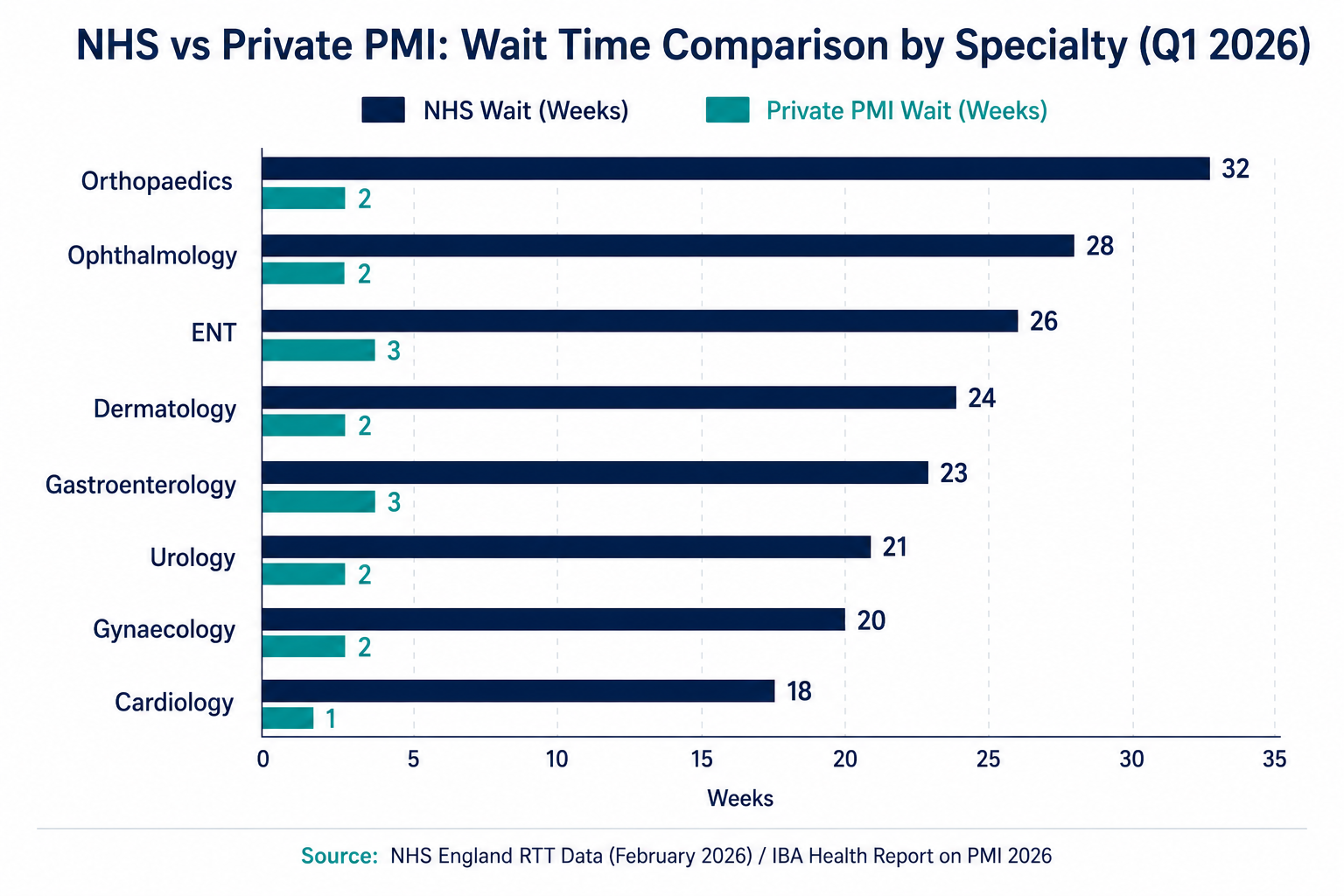
| Specialty | NHS wait (Q1 2026) | Private PMI wait |
|---|---|---|
| Orthopaedics (knee, hip, shoulder) | 32 weeks | 5–10 working days |
| Ophthalmology (cataract) | 21 weeks | 5–10 working days |
| Dermatology (non-cancerous) | 19 weeks | 5–7 working days |
| Ear, Nose and Throat | 17 weeks | 5–10 working days |
| Rheumatology | 22 weeks | 7–14 working days |
| Neurology | 25 weeks | 7–14 working days |
| Cardiology (non-emergency) | 18 weeks | 5–10 working days |
| Gastroenterology (endoscopy) | 26 weeks | 3–5 weeks |
| Urology (prostate/benign) | 28 weeks | 4–6 weeks |
| Mental health (IAPT therapy) | 12–52 weeks (postcode-dependent) | 5–14 working days |
Where the NHS Performs Well Regardless of PMI Status
PMI provides no advantage — and in some cases the NHS is clinically superior — for the following:
- Oncology (cancer treatment): NHS cancer centres provide world-class chemotherapy, radiotherapy, and surgical oncology. The NHS two-week wait target for urgent cancer referrals means PMI adds little to speed of diagnosis. Where PMI adds value is access to drugs not approved by NICE in your region.
- Emergency and trauma care: A&E, acute cardiac events, major trauma — PMI does not cover emergency care. The NHS emergency pathway is the appropriate route for all acute life-threatening conditions.
- Highly complex surgery: Transplant surgery, complex cardiac surgery, and neurosurgery are concentrated in specialist NHS centres with the volume and expertise private hospitals rarely match.
The 4 Types of UK Health Insurance — What Each One Actually Does
1. Private Medical Insurance (PMI) — the Main Product
PMI is what most people mean when they say "health insurance." It covers in-patient and day-patient treatment, specialist consultations, diagnostic tests, and hospital stays. It is the most comprehensive — and most expensive — form of UK health insurance. Most UK insurers offer three coverage tiers:
| Coverage element | Core / Budget | Standard | Comprehensive |
|---|---|---|---|
| In-patient treatment | Yes | Yes | Yes |
| Day-patient surgery | Yes | Yes | Yes |
| Specialist consultations | Limited | Yes | Yes |
| Diagnostic tests (MRI, CT) | Excluded | Yes | Yes |
| Outpatient physiotherapy | Excluded | Limited | Yes |
| Mental health cover | Excluded | Limited | Yes (28 days inpatient) |
| Cancer drug access | Excluded | Yes | Yes |
| Choice of consultant | Network only | Network | Open |
| Private room | Shared | Yes | Yes |
The hospital list is the most underexplored variable. Policies restricting you to a "limited hospital list" cost 20–40% less than "open list" policies. The trade-off is that your nearest private hospital may not be on the limited list — check before purchasing. If your nearest private hospital is already on the limited list, you are paying for open-list access you will never use.
2. Health Cash Plans — Lower Cost, Lower Coverage, Often Overlooked
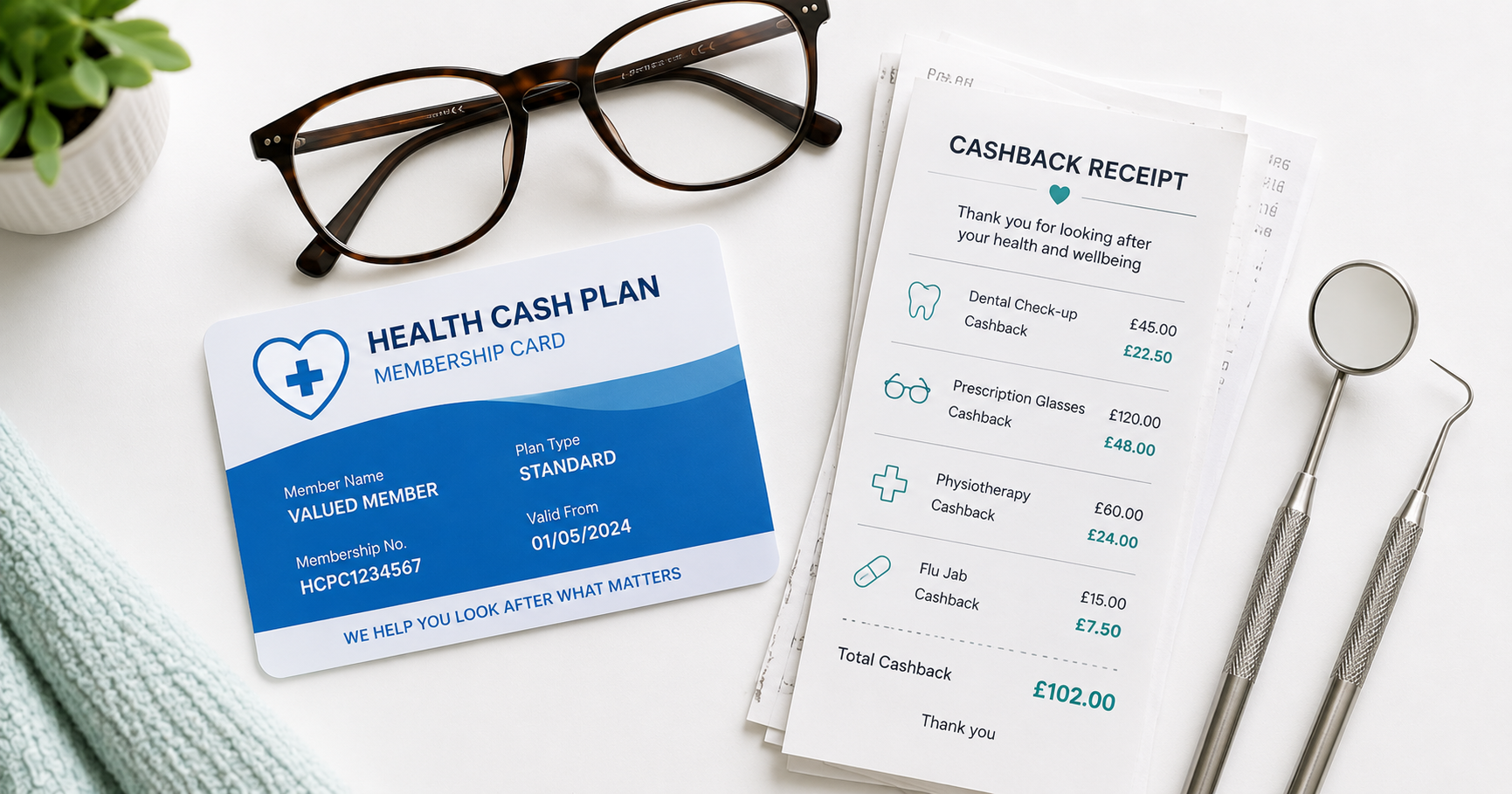
Health cash plans pay a fixed cash benefit when you access healthcare — not the actual cost of treatment. If your optician charges £45 for an eye test, a cash plan paying £40 for eye tests reimburses you £40 regardless of the actual bill. What cash plans cover: dentistry, optical, physiotherapy, chiropody, complementary therapies, and in some plans specialist consultations and diagnostic tests up to defined annual limits. Cost: £10–£40 per month depending on coverage level (Simplyhealth, Westfield Health, HSF Health Plan are the main UK providers).
3. Dental Insurance — Separate From PMI, Almost Always Worth Checking
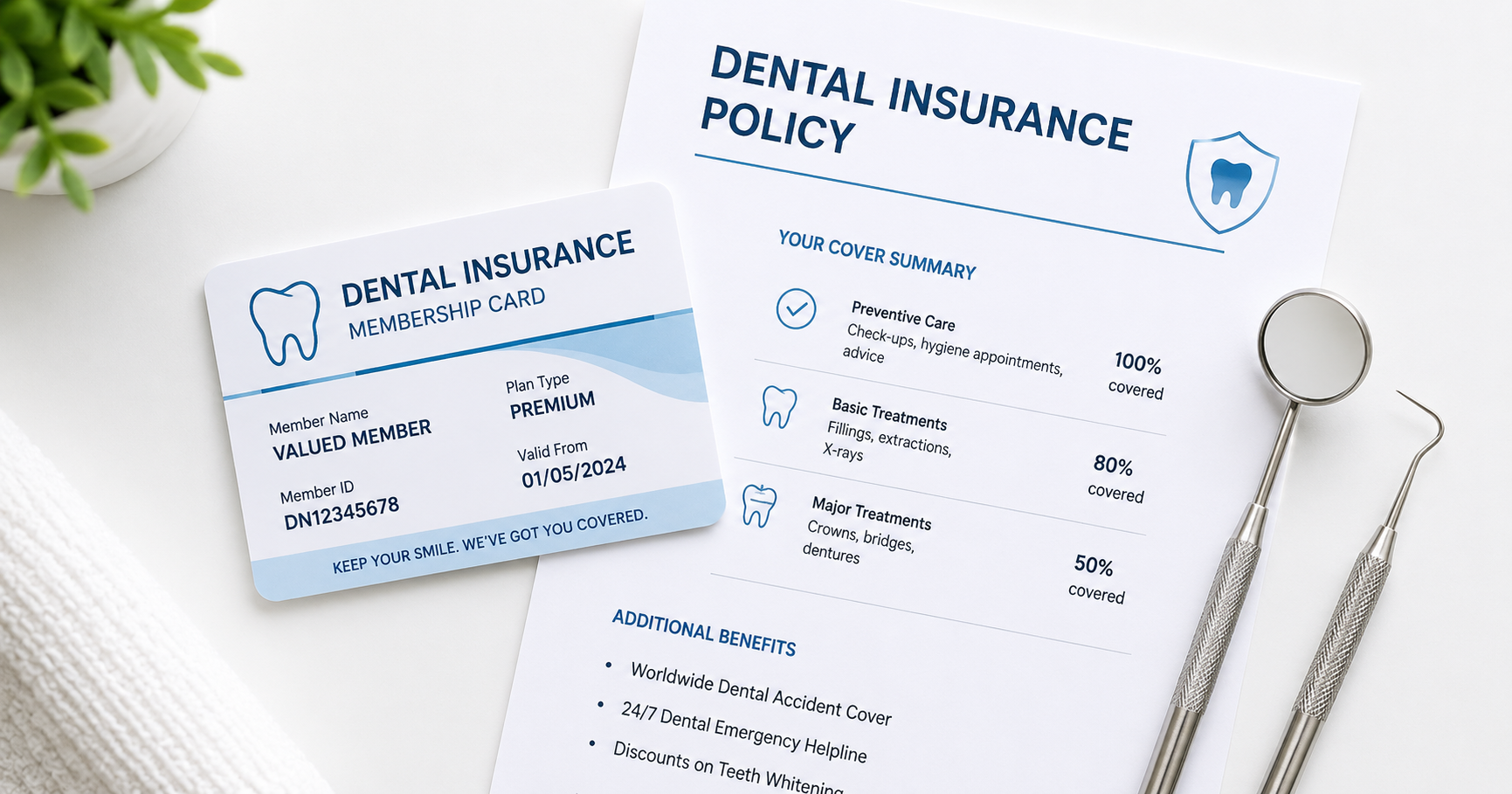
Dental insurance is not included in standard PMI. It is a distinct product covering private dental treatment — check-ups, fillings, crowns, extractions, and in some policies orthodontics and implants. The NHS dental crisis makes this relevant: in 2023, NHS England reported that 40% of adults had been unable to access NHS dental care when they needed it. Private dental costs — a crown at £600–£800, a root canal at £400–£700 — represent a significant unplanned expense for most households. Break-even rule of thumb: if you attend one check-up and one treatment per year, a £25–£35/month dental policy typically covers its cost.
4. International Health Insurance — For Expats and Long-Term Travellers
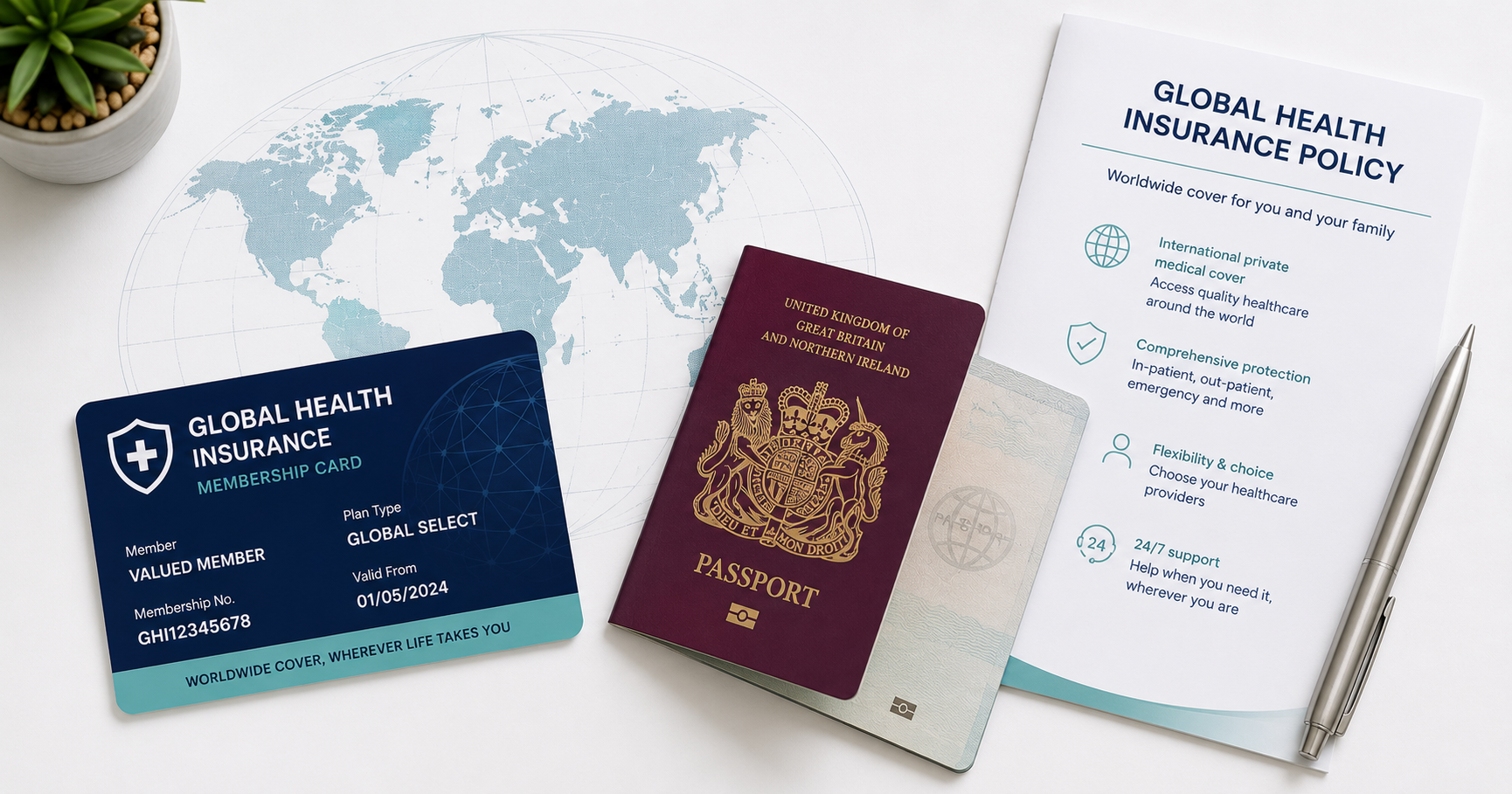
International health insurance provides PMI-equivalent coverage outside the UK, typically for expatriates, long-term remote workers, or frequent international travellers. It is distinct from travel insurance (which covers short-term trips) and covers both acute and chronic conditions depending on the plan. US coverage requires careful attention. Medical costs in the United States are among the highest in the world — an emergency hospitalisation averages $22,000 for three days according to the Healthcare Cost and Utilisation Project (HCUP). International plans explicitly including or excluding the US charge significantly different premiums.
How Much Does Private Health Insurance Cost? (2026 Data by Age)
PMI premiums are driven primarily by age — not claims history. Unlike car insurance, making a claim does not directly increase your next renewal premium (though your insurer's general portfolio experience does). The primary cost variables are: age, coverage tier, hospital list type, excess amount, and pre-existing conditions.
| Age band | Core cover | Standard cover | Comprehensive |
|---|---|---|---|
| 25–29 | £30–£48 | £45–£68 | £68–£110 |
| 30–39 | £42–£68 | £62–£98 | £95–£155 |
| 40–49 | £68–£105 | £96–£148 | £145–£230 |
| 50–59 | £105–£165 | £148–£230 | £220–£350 |
| 60–69 | £160–£250 | £220–£345 | £330–£520 |
Family policy costs. Family PMI typically costs 2.5–3x the individual rate, reflecting the lower per-head risk of covering children. A family of four (two adults aged 35 and 33, two children aged 6 and 9) on a standard policy with £250 excess typically pays £180–£280 per month.
5 Ways to Reduce Your PMI Premium
- Increase your excess. Raising from £100 to £500 typically cuts premiums by 10–15%; raising to £1,000 can save 20–30%. Choose the excess you can realistically cover from savings.
- Choose a limited hospital list. If your preferred local private hospital is already on a standard list, choose the restricted-list policy. The coverage is equivalent; the premium is 20–40% lower.
- Reduce outpatient coverage. Full outpatient cover (consultations and diagnostics without referral) is the most expensive element. A policy covering inpatient and day-patient care only, requiring a GP referral for outpatient claims, costs 25–35% less.
- Access group cover through your employer. Group PMI schemes are 20–40% cheaper per person than individual policies. Even after the P11D tax implication, the effective cost is typically lower than buying individually.
- Use a broker to access non-standard markets. The major insurers represent only part of the UK PMI market. Specialist brokers access Freedom Health, WPA and others that may offer better terms for specific age groups or health profiles.
Pre-Existing Conditions: How UK Insurers Handle Your Medical History
This is the most consequential decision in PMI purchasing and the area where most policyholders discover problems at the point of claiming. UK private medical insurers use one of three underwriting approaches.
Moratorium Underwriting (Most Common)
Moratorium underwriting automatically excludes any condition you had symptoms of, received treatment for, or consulted a GP about in the five years before your policy start date. The advantage: no medical questionnaire at application — faster and simpler to set up. The risk: you may not know which conditions are excluded until you try to claim. If you had a back problem in 2022 and now have a recurrence, a moratorium policy started in 2024 will likely exclude it. The moratorium lift: if you remain claim-free and symptom-free for two continuous years after your policy starts, that condition can be reviewed for inclusion.
Full Medical Underwriting (FMU)
FMU requires a detailed health questionnaire at application. Every condition you disclose is assessed individually — some excluded, some attracting a premium loading, some accepted on standard terms. The advantage: you know exactly what is excluded at the outset. No surprises when claiming. The risk: requires accurate, complete disclosure. Omitting a condition risks policy voidance at the point of claim. FMU is often better for older applicants who want to know exactly what they are buying.
Continued Personal Medical Exclusions (CPME)
CPME is used when switching insurers. The new insurer accepts the exclusions already applied by your previous insurer — without re-underwriting your full history. This protects conditions you have had treated under your existing policy (which would be excluded as pre-existing by the new insurer under standard moratorium terms).
Is Private Health Insurance Worth It? The Honest Financial Assessment
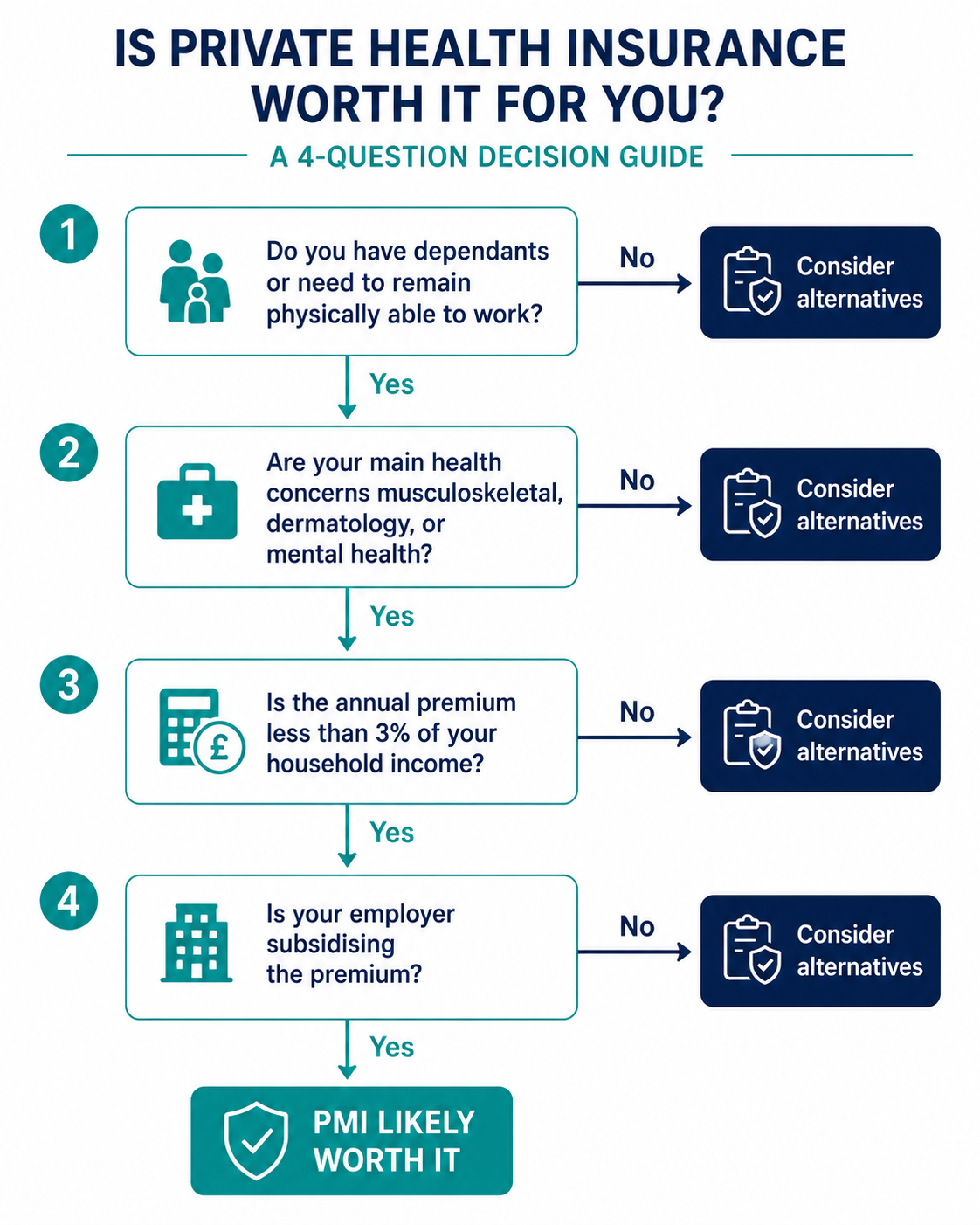
The financial case for PMI depends on three variables: your age, your likely utilisation, and the gap between NHS and private care for the conditions you are most likely to need.
The Break-Even Calculation
At an average premium of £95/month for a 40-year-old (standard mid-tier policy), annual cost is £1,140. This breaks even if you use roughly: one specialist consultation per year (private consultation £200–£400), one diagnostic scan per year (private MRI £450–£800), or one surgical procedure every 4–5 years (day surgery £2,500–£6,000 privately). For people in their 40s and 50s, particularly with physically demanding lifestyles or a family history of musculoskeletal conditions, this utilisation pattern is realistic.
When PMI Is Clearly Worth It
- You value faster access to a named consultant over the NHS pathway.
- Your work requires you to be physically able — delayed musculoskeletal treatment has a direct income cost.
- You have a family and want to avoid NHS waiting times for children's elective care.
- You are in a phase of life (perimenopausal, post-40 male) where musculoskeletal and general health issues increase in frequency.
- Your employer offers it as a subsidised benefit — the effective cost is lower than the P11D value.
When PMI Is Harder to Justify
- You are under 35 in good health with no significant family history.
- Your primary health concerns are chronic conditions (which PMI will not cover as pre-existing).
- You are primarily concerned about emergency care (which PMI does not cover).
- Your nearest private hospital has 6–8 week waits itself — negating the speed advantage.
- You could comfortably self-fund a single year of specialist care from savings.
How to Choose a Private Health Insurance Policy Without Getting Burned
Step 1 — Define the coverage you actually need before looking at prices. Do you need outpatient cover (specialist consultations without hospitalisation)? Do you need mental health cover? Is dental cover needed (it is a separate product)? Do you have a preferred hospital? Start with these answers, not with the cheapest premium. Buying the wrong product at a low price is worse than paying the right price.
Step 2 — Decide on your underwriting approach based on your medical history. If you are in good health with no significant recent history, moratorium underwriting is straightforward. If you have had significant health events in the past five years that are now resolved, consider full medical underwriting for clarity. If you are switching from an existing policy, always ask about CPME.
Step 3 — Check the hospital list for your area before comparing premiums. Pull up the insurer's hospital directory for your postcode. Confirm that the hospitals you would actually want to use are included. A cheaper limited-list policy covering your preferred hospitals is better value than an expensive open-list policy you will never fully use.
Step 4 — Set the excess at the highest level you can comfortably cover. Setting it at £500 rather than £100 typically saves £100–£200 per year. If you can absorb a £500 cost from an emergency fund, the higher excess is the better economic choice.
Step 5 — Compare the actual policy document, not the marketing material. Look specifically for: the pre-existing condition definition, the chronic condition exclusion, the outpatient coverage limits (some policies cap outpatient spend at £500–£1,000 per year despite presenting as comprehensive), and the mental health cover terms.